Where new projects really begin
The start of the new year and the month of January always get me thinking about beginnings. I keep returning to the image of a white, empty page: a gentle nudge to start fresh or to keep going, to take stock and consider the possibility of new choices. Naturally, my thoughts drift toward new projects, new designs, and new ideas. And if you know me at all, you know that I’m a master of casting on new things and just as easily I can abandon them and move on to something else.
But I’m not saying it’s only a bad thing. I do finish a lot, too, and I’ve learned quite a lot along the way. So this slightly longer post is about new beginnings and new projects, and most importantly about yarn choices.
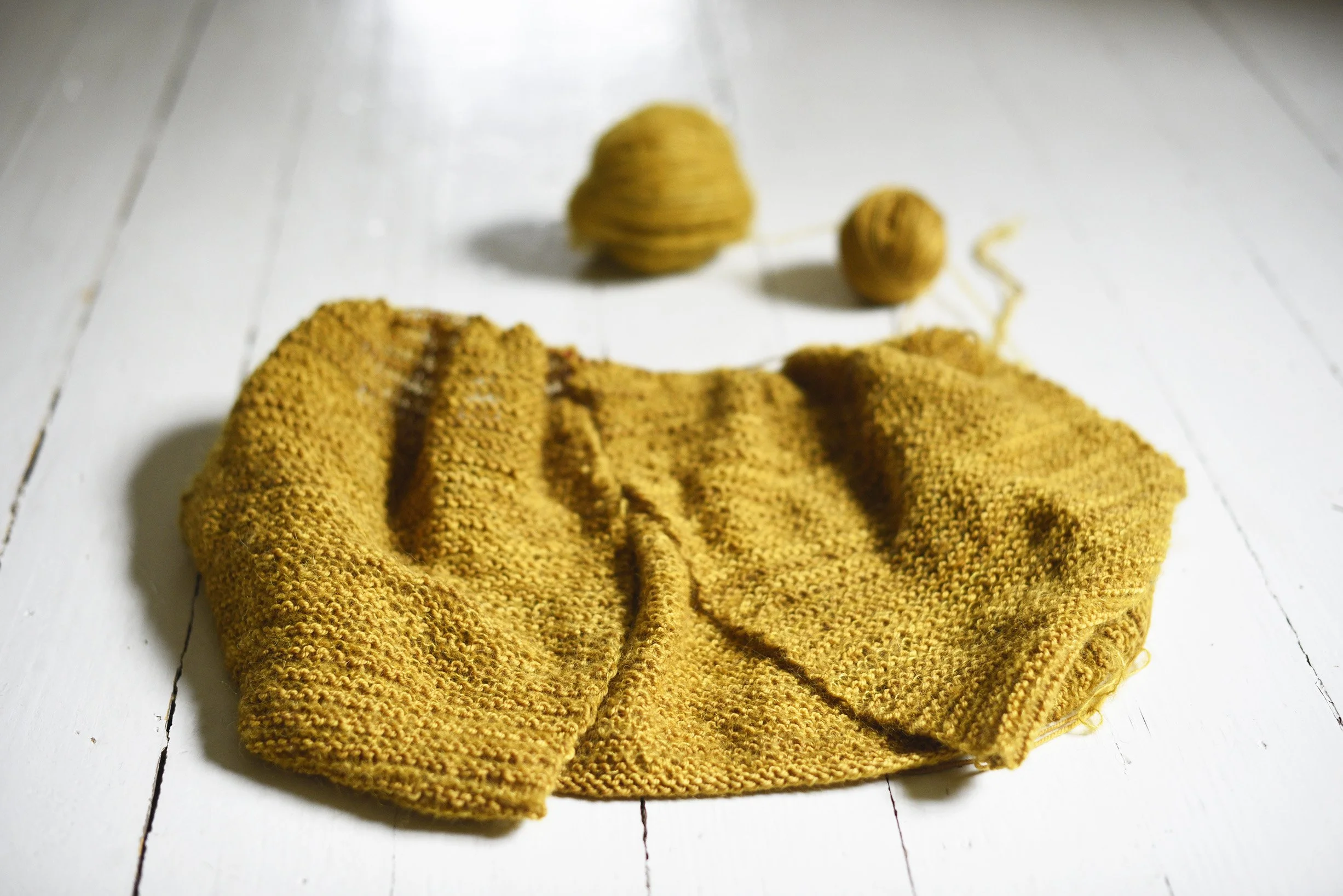
My Portena Cardigan, knitted striping Suri alpaca and sport-weigh merino - pattern in the making!
Yarn and fibre
Because before a single stitch count, before choosing needle sizes, and often before I even think about colour, there is yarn.
Yarn choice is often talked about as a technical decision: fibre content, weight, gauge. For me, though, it has always been something more intuitive. How a yarn feels in my hands, how it moves on the needles, and how it behaves once washed and worn. These qualities shape not only the finished garment, but the full knitting experience along the way.
Fibre quietly shapes everything in knitting. It affects how the fabric feels in your hands, how it grows or doesn’t grow, how it wears over time, and how much joy there is in the knitting itself. Understanding fibre content isn’t about rules or right answers. It’s about possibilities and knowing which ones will support the garment you want to make. When I’m designing, I don’t always start by asking what will this look like. A better question for me is how do I want this to feel.
To me, fibre is feeling, and different fibres bring very different personalities to a knit.
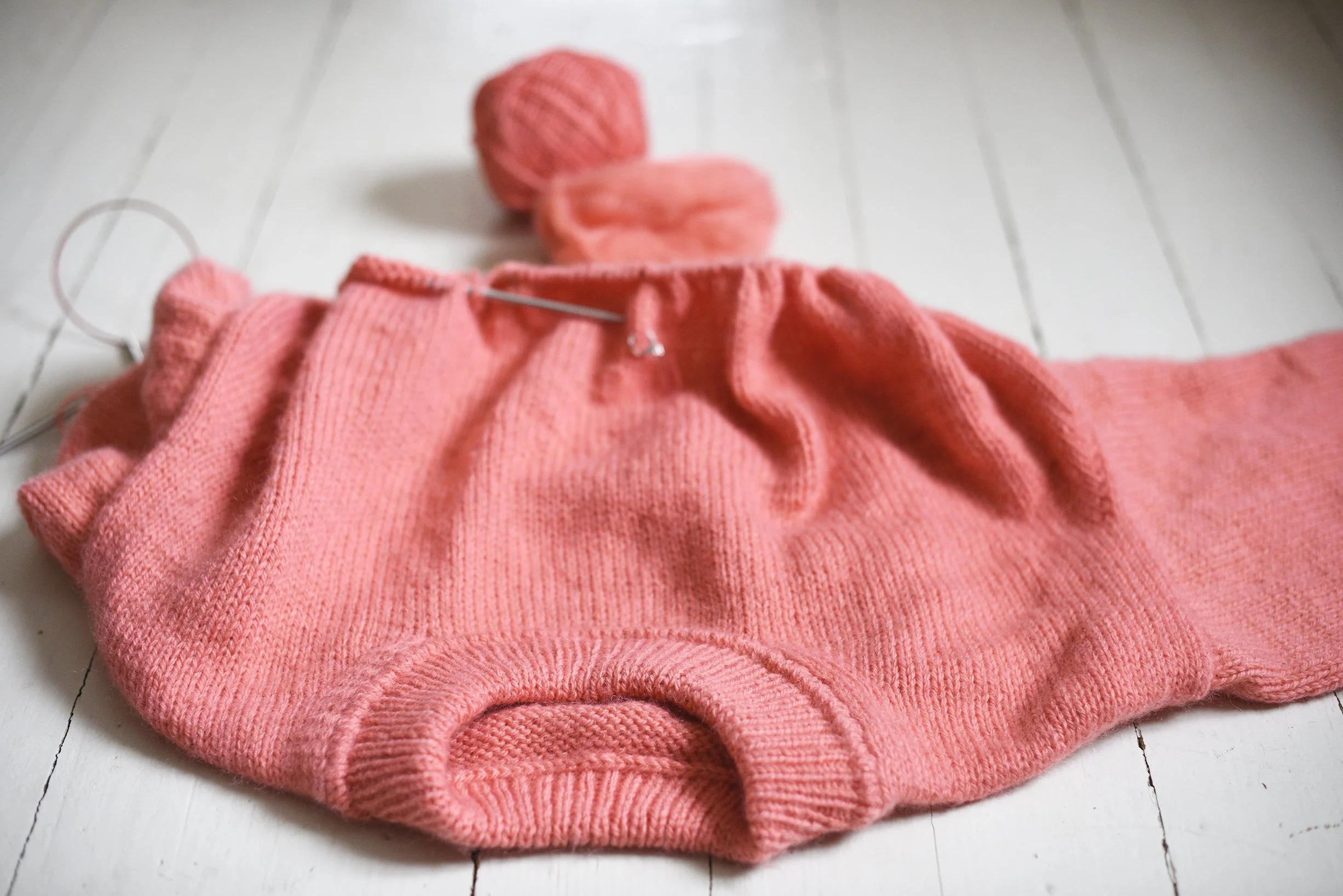
One of the new projects for the year 2026. This one is knitted with West Wool Tandem and Glowhair: holding two strands together is still my favourite!
Wool is where I so often start
For me, wool remains the backbone of knitwear for good reason. Its natural crimp (or its 3D waviness, zig-zag, or curliness) creates elasticity, memory, and warmth, making it wonderfully forgiving on the needles and comfortable to wear. But it must be noted that not all wool behaves the same.
Merino is soft, smooth, and often next to skin friendly, making it a perfect choice for sweaters, shawls, and accessories. Keep in mind, though, that merino doesn’t always last forever on its own. For socks and other high wear items, a merino nylon blend is usually a better choice. But I must admit that merino wool, especially in lighter weights to my taste, has a springiness that makes it a joy to work with. It holds texture beautifully and has a kind of friendly predictability, perfect for cables, ribbing, and garments meant to be worn often and loved hard.
Longwools such as Bluefaced Leicester or Corriedale offer more structure and durability, with a slightly more rustic feel. Non superwash wool holds texture crisply and blooms beautifully after blocking, making it ideal for cables, ribs, and stitch definition. Superwash wool, on the other hand, is smoother and drapier, easier to care for, but often stretches more with wear.
Alongside these more familiar wool types, I’ve also grown increasingly fond of working with fibres closer to home. There’s also something meaningful, at least to me, in working with a fibre that comes from close to home. Local wool carries a sense of continuity and care. It connects knitting not only to garments and patterns, but to landscapes, seasons, and traditions that quietly shape the way we make things.
So let’s talk a little bit about Finnsheep! Their wool has a softness that often surprises me, but it’s absolutely not the same as merino! We often associate local or traditional wools with something rough or rustic, and yes there’s some truth to it. Finnsheep wool fibres are fine and airy, with a gentle bounce that works beautifully in handknits. There’s warmth without heaviness, and a lightness that makes garments comfortable to wear indoors as well as outside.
Compared to merino, Finnsheep wool often feels a little more alive in the hands. It has elasticity and memory, but also a certain openness that allows fabrics to breathe. Stitches bloom softly after blocking, and textures feel relaxed rather than overly sharp. It’s a wool that feels honest and uncomplicated, but still refined. I do think that Finnsheep wool works particularly well for sweaters, cardigans, and accessories meant for everyday wear. It holds its shape well, ages gracefully, and feels good against the skin for most wearers.
So with all that, I would love to encourage you to think of wool as a spectrum, not a category. Your choice within it can radically change the final fabric.
Plant fibres
Plant fibres bring a very different energy to knitting. To me they always seem to be made for summer knits, and living in this nordic country with a colder climate, it’s for a good reason. Plant fibres don’t usually offer same warming qualities as many animal fibres do.
Linen starts stiff and crisp but softens beautifully with wear. It has weight, drape, and a dry, cool feel, making it perfect for warm weather garments. Cotton is soft and breathable, but heavy and inelastic. It demands structure in pattern and fit, so think garments worked in pieces, seams, and thoughtful shaping.
Hemp behaves similarly to linen, often with even more durability. Personally, I find many plant fibres a bit rough on the hands, especially over longer knitting sessions, so that’s something to take into account when planning a project as well.
Luxury fibres
Luxury fibres are often blended rather than used alone, and for good reason. They tend to be more expensive than wool, but they also bring very different characteristics.
Silk adds strength, sheen, and drape, highlighting both texture and colour beautifully. Alpaca is warm and soft but lacks elasticity. On its own, it can grow quite dramatically. Cashmere offers exceptional softness and warmth, but benefits from the structure and support that wool provides.
Blended thoughtfully, these fibres elevate a yarn without compromising wearability. They’re wonderful for garments meant to feel special and functional. Because they don’t bounce back like wool, shaping, seams, and construction matter more. They shine especially in simple silhouettes and clean lines where drape can take centre stage.
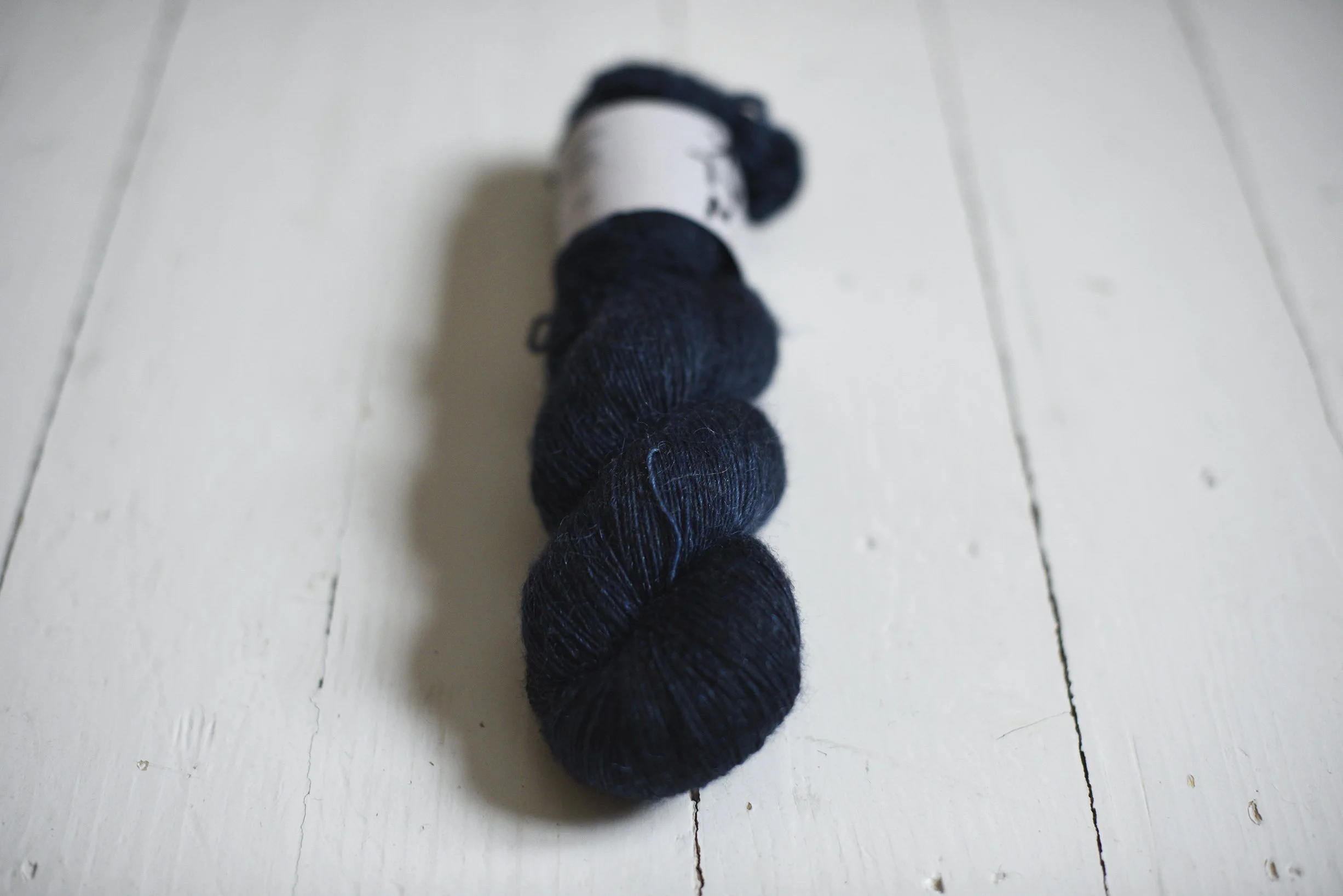
Walk Collection old base Cottage Mohair, with 80% wool and 20% mohair. I’m loving this single ply from my stash!
Blends
Blends such as wool with silk, nylon, or recycled fibres often surprise me the most. They can add durability, drape, or subtle sheen, changing how a finished piece lives in your wardrobe. This is why the same gauge, achieved with different yarns, can result in two garments that feel completely unlike each other.
Many of my designs use two yarns held together, not for complexity’s sake or to make things more expensive, but for balance. A fingering weight merino paired with a lace weight silk mohair or suri alpaca creates a fabric that is warm and light, structured and soft.
Adding a lace weight strand of mohair or suri alpaca changes a fabric in subtle but powerful ways. It adds warmth without weight, softens stitch definition, and creates depth, often with a gentle halo. It also encourages colour blending rather than sharp contrast.
Held together with wool, silk, or linen, these fibres add mood, a kind of softness that’s felt before it’s seen. Often this is a combination that wears well, forgives small inconsistencies, and ages beautifully over time.
That extra strand of lace weight fluff also allows for subtle colour play. Even when two yarns appear similar in shade, their different textures catch the light in unique ways, creating a fabric that feels alive.
Spinning, the layer underneath the yarn
Two yarns can share the same fibre content and weight and still feel completely different in your hands. That difference often comes down to how the fibre is spun.
Spinning determines how fibres are aligned, how much air is trapped inside the yarn, and how the yarn responds to movement, wear, and washing. It’s the quiet architecture beneath the surface.
Woolen spun yarns are airy and light. Fibres are carded rather than combed, sitting in many directions and trapping plenty of air. The result is a yarn that feels soft, warm, and slightly fuzzy, with gentle stitch definition. They’re wonderful for cozy sweaters and cardigans, and for larger projects like coats. A woolen spun yarn can make a long garment feel significantly lighter than a worsted spun one. Woolen spun yarns also work like magic for colourwork, creating soft transitions and harmonious colour combinations. With all that air trapped inside the yarn, you get exceptional warmth, though you do lose some crispness in the finished fabric.
Worsted spun yarns, in contrast, are smoother and denser. Fibres are combed and aligned in the same direction, creating a firm, polished yarn with excellent stitch definition and durability. They truly shine in cables and textured stitches. I also tend to reach for a worsted spun yarn when knitting all over ribbing, which relies heavily on the yarn’s memory to stay sharp and defined. These yarns are ideal for garments that benefit from structure and longevity.
Neither is better. They simply tell different stories in fabric.
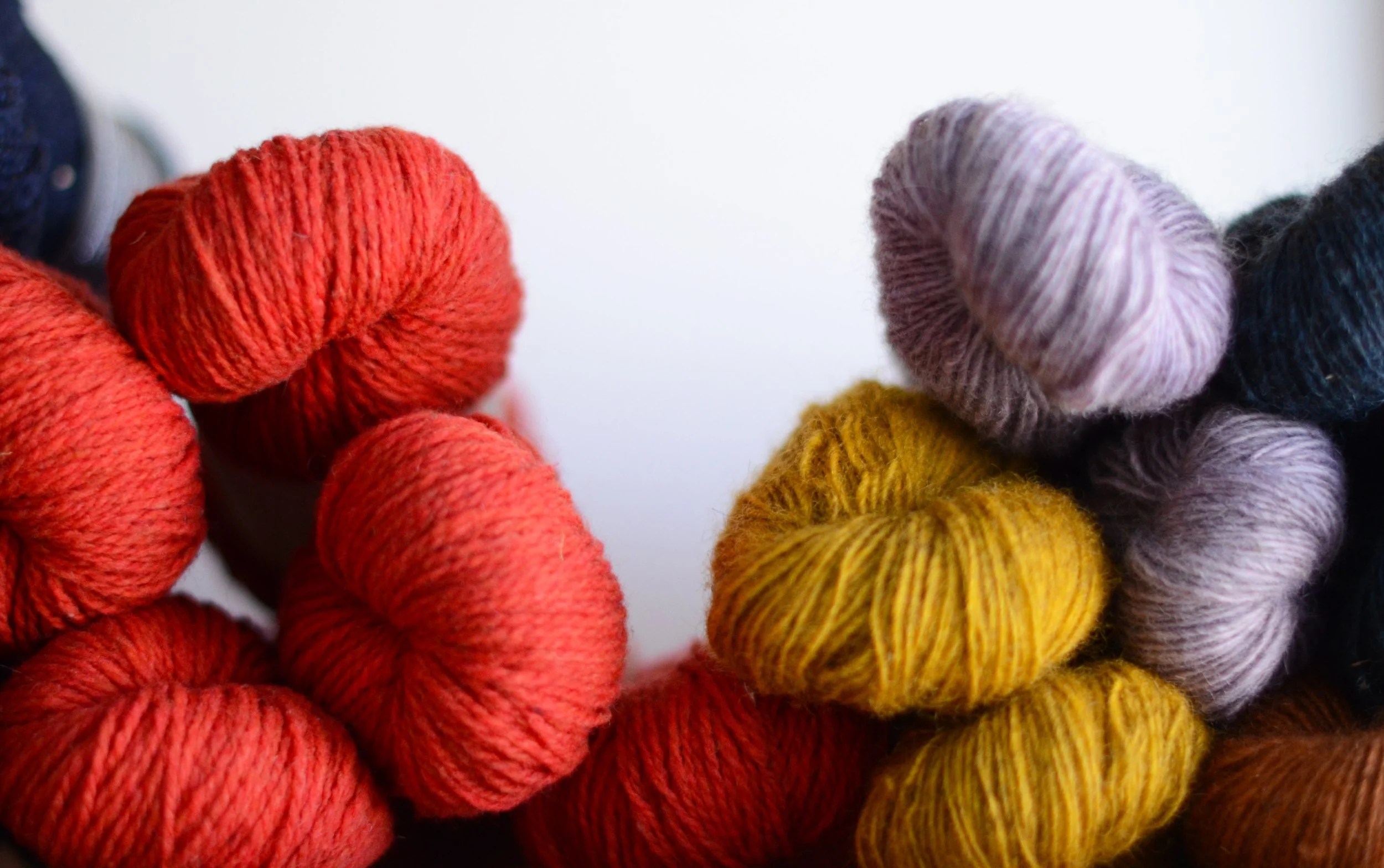
From 2-ply to single ply!
A gentle invitation back
I took the end of last year and the beginning of this one mostly off. Time to rest, knit quietly, and let ideas settle. Now I’m slowly stepping back into sharing, writing, and designing, and this felt like a good place to begin, with the foundations.
To celebrate getting back into full swing, I’m offering a little welcome back sale.
25% off all patterns when you spend 10 € or more, with code JANUARYSALE
The last day of the sale is Monday the 26th, January 2026.
If you’ve had a project saved for later, or you’re feeling ready to cast on something new, this is a lovely moment to do so.
Thank you for being here, for reading, and for knitting alongside me in busy seasons and quiet ones alike.